 Titan ChimneyTitan Chimney
Know it's safe before you light
A chimney sweep in Houston, TX is the trained person who clears creosote, soot, and blockages from your flue and firebox, then inspects the system so you can burn safely. If you've searched chimney sweep near me before the first cool front, here's the straight answer: most Houston homes burn so few nights a year that buildup hides until that first fire of the season fills the room with smoke. We sweep the flue, check the cap and damper, and tell you what we actually see — no upsell theater.
Call (346) 591-9370
Tell us about your chimney sweep job — we'll get you a fast quote.
A firm, all-in price confirmed before we start — no surprises.
On time, done to standard, and tidy when we leave.
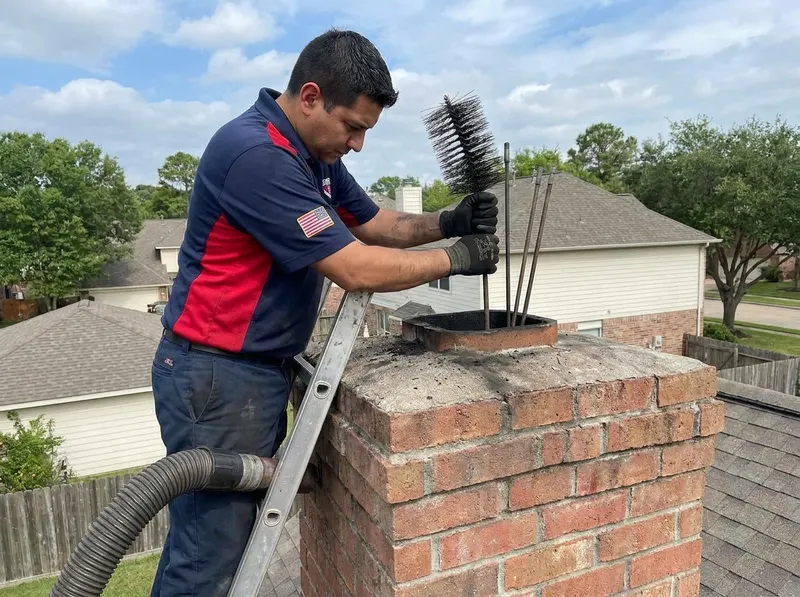
We brush and vacuum the flue, smoke chamber, and firebox, removing creosote and soot before they become a fire hazard. Creosote matters most for wood burners who only light a handful of nights each Houston winter, because buildup sits unburned and hardens between seasons. We lay drop cloths and leave the hearth swept-clean.
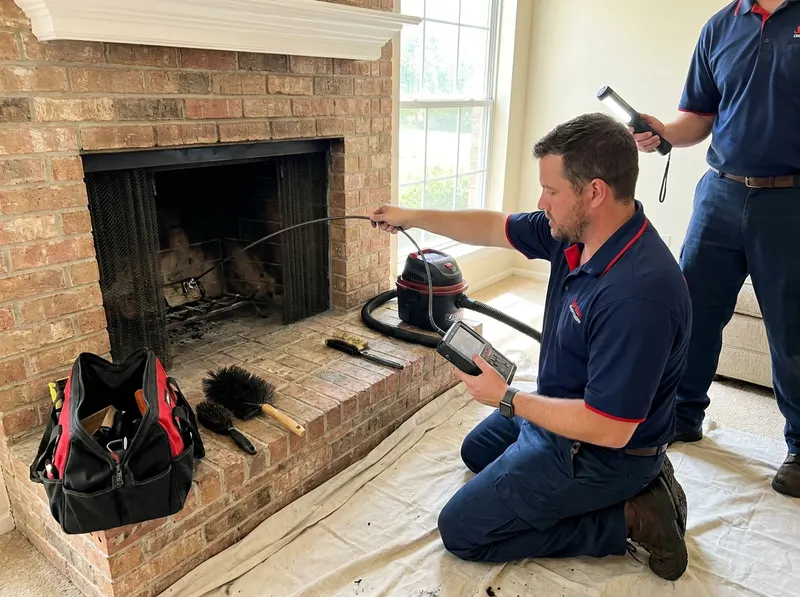
A Level 1 covers the accessible flue and connections; a Level 2 adds an interior camera scan, which matters when you're closing on a home or had water intrusion. We tell you plainly what's worn and what can wait — useful in older Heights and Garden Oaks bungalows where original masonry has aged decades.
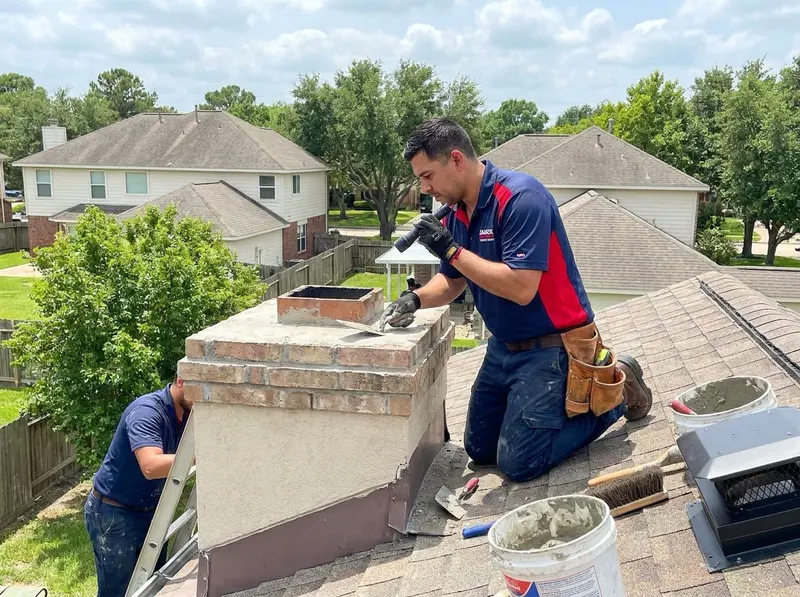
A missing or rusted cap lets in rain, leaves, and animals; a stuck damper kills your draft. We install caps, seal crowns, and free or replace dampers. This matters in Houston's wet, humid climate, where an open flue invites moisture damage long before you ever light a fire.
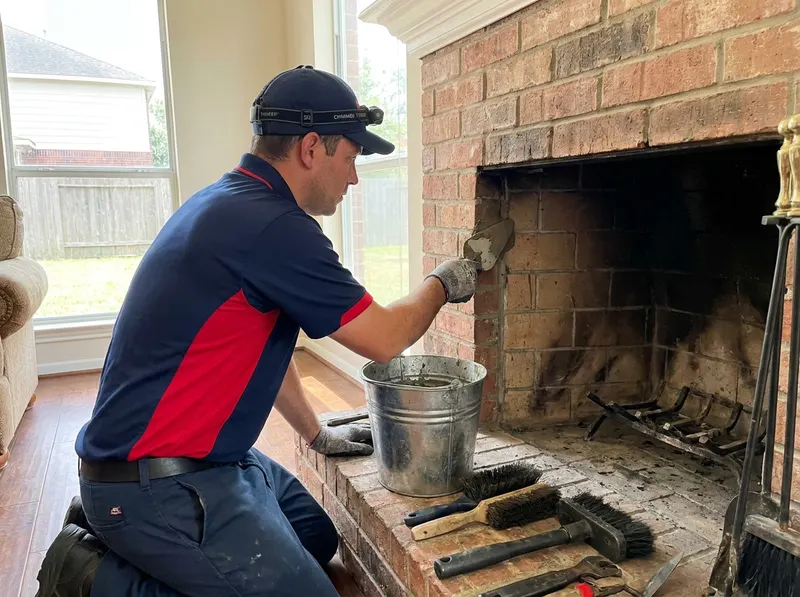
We repair spalling brick, cracked firebox panels, and deteriorated mortar joints. Quoted as a range up front because every chimney is different, with the exact figure confirmed once we've actually looked. Honest assessment first — we'd rather tell you a small patch holds than sell you a rebuild.
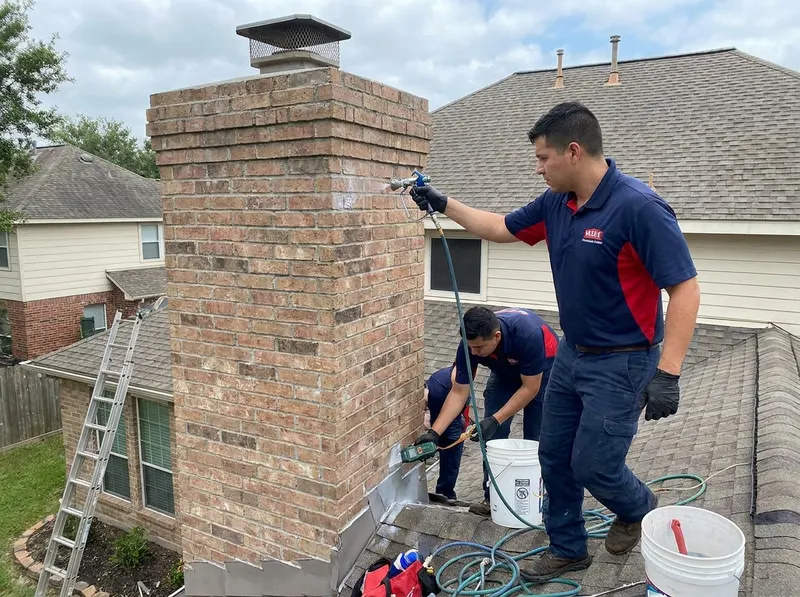
Gulf Coast rain finds every gap. We trace chimney leaks to the real source — crown, flashing, or porous brick — and apply breathable waterproofing where it's needed. This is one of the most common calls in Houston, since a 'chimney leak' is often a flashing problem the roofer missed.
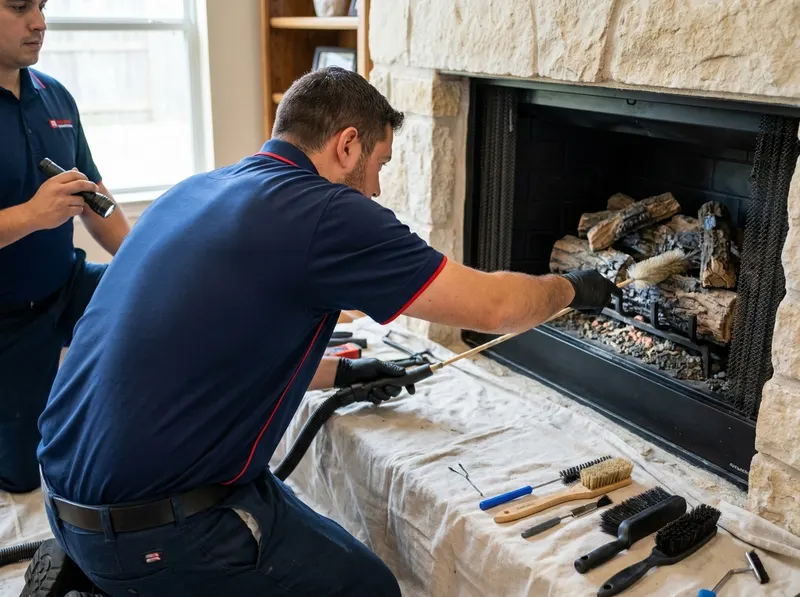
Even gas systems need a clear flue and a draft check. We inspect the venting, check for soot staining, and confirm the unit is drawing properly. A clean-looking gas flue can still block or back-draft, which matters most in tightly sealed newer Clear Lake and Kingwood homes.
Most people aren't sure which visit they actually need, so here's how to pick. If you burn regularly and just want the flue cleared before winter, book a standard sweep and Level 1 inspection — it covers the readily accessible parts of the chimney and is the right call for a system in known condition. If you're buying or selling a home near Memorial or West University, or you've had a chimney fire or a roof leak, choose a Level 2 inspection — it adds a camera scan of the flue interior and the attic/crawl runs you can't see from the firebox. The trade-off is time and cost: a Level 1 is quicker and cheaper, while a Level 2 takes longer and runs higher but catches cracked tiles and hidden gaps a flashlight misses. For gas logs the choice is different again — if you smell soot or see staining, you likely need a sweep plus a draft check rather than masonry work, and the trade-off is that a gas flue still needs eyes on it even though it looks clean. When you call, describe what you're burning and how often, and we'll point you to the lighter visit if that's genuinely all it needs.
| Standard sweep + Level 1 inspection | $150–$250 (ballpark, confirmed on-site) |
| Level 2 camera inspection | $250–$450 |
| Chimney cap supply & install | $200–$500 |
| Damper repair / replacement | $250–$600 |
| Crown seal / minor masonry patch | $300–$800 |
| Waterproofing application | $400–$900 |
| Major masonry / firebox rebuild | Quoted after inspection |
Your exact price is confirmed before any work begins.
Houston's mild, humid climate is the real reason chimney work here looks different than up north — homeowners around Memorial Park and the Museum District might burn only ten or fifteen nights a season, so creosote and animal nests build quietly during the long warm months and surprise people on that first norther. Heavy Gulf rain also turns many 'smoke' complaints into water complaints: a leak that shows up as a stain near the firebox in a River Oaks or West University home is just as often failed flashing or a cracked crown as it is the flue itself. Because so few people burn often, the safest time to book is spring or summer, when waits are short and we can fix the cap or crown long before the first cold front rolls past Buffalo Bayou Park.
Neighborhoods we cover: The Heights, Montrose, River Oaks, West University Place, Memorial, Spring Branch, Bellaire, Kingwood, Clear Lake, Garden Oaks.
Once a year is the standard guidance, even if you barely burn. In Houston that annual check matters less for heavy creosote and more for catching animal nests, moisture damage, and rust from our humidity — problems that develop during the long off-season, not from the fire itself.
Yes. We cover The Heights, Bellaire, Montrose, Garden Oaks, Spring Branch and the surrounding Harris County areas. Older bungalows in The Heights and Garden Oaks often have original masonry, so we'll flag aging mortar and crown wear during the visit.
You do. A gas log still vents through a flue that can collect debris, soot, or animal intrusion, and the draft needs to be confirmed. We inspect the venting and check for staining; tightly sealed newer Clear Lake and Kingwood homes especially benefit from a draft check.
A standard sweep with a basic inspection typically falls in the $150–$250 market range, and a camera-based Level 2 inspection runs higher. Those are ballparks — we confirm the exact price on-site before any work, and we never quote a firm number sight-unseen.
Spring and summer. Demand peaks in fall, roughly October through December, as people prep for the short cool season, with a second bump when an early cold front hits. Booking in the off-season means shorter waits and time to handle any repairs before you light the first fire.